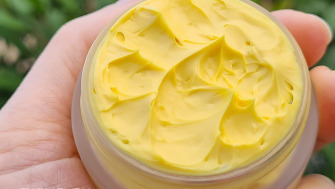
Ácido esteárico

[23]
4,06  (IVA incluido)
3,41  (sin IVA)
_ _
Código Talla Precio neto Precio total Cantidad
M-1418-0.1 100 g
3,41 
4,06 
M-1418-1 1 kg
10,45 
12,44 
M-1418-5 5 kg
33,58 
39,96 
M-1418-25 25 kg
135,23 
160,92 
Referencia del producto D-1418

Descripción

Ácido esteárico - Agente de textura, estabilizador y factor de consistencia

El ácido esteárico es un ácido graso saturado, presente de forma natural en diversas mantecas y aceites vegetales, y constituye un ingrediente indispensable en la formulación de cosméticos sólidos y emulsiones ricas. Aunque lleva el nombre de "ácido", en cosmética no tiene una función exfoliante, sino que actúa como agente espesante y opacificante. Está presente en cremas, bálsamos, ungüentos, sticks y productos en barra, jabones y velas.


Ingredientes (INCI): Stearic Acid.


Características técnicas

  • Origen: 100% vegetal (derivado de aceites vegetales).
  • Aspecto: Gránulos o escamas blancas con olor neutro.
  • Solubilidad: Soluble en la fase oleosa calentada.
  • Función: Coemulsionante, agente espesante, factor de consistencia, agente opacificante.
  • Dosis general recomendada: 2% - 10% (hasta un 30% en velas o productos sólidos).

Información de la literatura especializada

El ácido esteárico es una de las materias primas más utilizadas en la industria cosmética debido a su perfil de seguridad y su versatilidad:

  • Estructuración de emulsiones: La literatura especializada lo describe como un excelente agente formador de red cristalina en cremas, evitando la separación de fases y proporcionando una mayor estabilidad a largo plazo.
  • Perfil sensorial: A diferencia de otras ceras vegetales, el ácido esteárico aporta a las emulsiones una textura mate, no brillante, y una sensación de "toque seco", favoreciendo una rápida absorción en la piel.
  • Protección de la piel: Como componente natural de la barrera lipídica, ayuda a mantener la integridad del estrato córneo y protege la piel frente a la pérdida de humedad.
  • Saponificación: En la elaboración de jabón, está documentado por su capacidad para acelerar la "traza" y proporcionar una espuma densa y estable.

Propiedades principales

  • Factor de consistencia: Transforma una loción fluida en una crema densa y rica.
  • Opacificante: Proporciona a los productos cosméticos un aspecto blanco, mate y untuoso.
  • Estabilizador: Ayuda a mantener la homogeneidad de las emulsiones Aceite en Agua (O/W).
  • Endurecedor (agente endurecedor): Aumenta el punto de fusión de los bálsamos labiales y las mantecas corporales, evitando que se derritan a altas temperaturas ambientales.

Aplicaciones

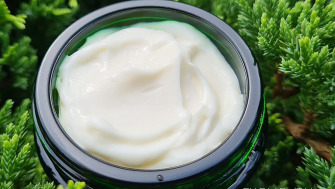
  • Cremas hidratantes faciales y lociones corporales.
  • Cremas de afeitar, cremas limpiadoras.
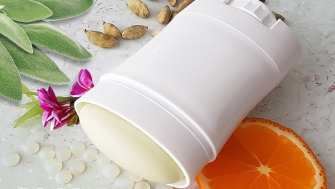
  • Bálsamos labiales y sticks cosméticos.
  • Mantecas corporales tipo "whipped body butter" para una estructura aireada pero estable.
  • Jabones naturales elaborados en proceso en frío o en caliente.
  • Velas vegetales (aumenta el tiempo de combustión y la opacidad).

Guía de formulación

  • Procedimiento: Añadir a la fase oleosa de la preparación y calentar hasta que se funda por completo (aprox. 65-70°C). Es estable en un amplio rango de pH.
  • Sinergias Ellemental:
    • Para la barrera cutánea: Combinar con Lactato de Sodio en la fase acuosa para crear una crema intensamente hidratante y protectora.
    • Para una textura aterciopelada: Asociar con Aceite MCT para lograr una rápida absorción y un acabado mate.

Preguntas frecuentes (FAQ)

¿Es adecuado para pieles grasas o con tendencia acneica?
Aunque es un ácido graso, el ácido esteárico vegetal tiene un bajo potencial comedogénico en formulaciones bien equilibradas. Su sensación "seca" suele hacerlo más agradable en pieles mixtas que otras mantecas vegetales más pesadas.

¿Puedo usar el ácido esteárico como único emulsionante?
No. El ácido esteárico es un coemulsionante. Requiere un emulsionante principal para crear una emulsión estable; su función es mejorar la textura y la estabilidad.


Seguridad de uso

Perfil: Ingrediente seguro, biodegradable, de origen vegetal y estable a la oxidación.
Precauciones: Uso cosmético externo. Manipular con cuidado cuando esté caliente (fundido).
Almacenamiento: En un lugar seco y fresco.


Referencias científicas (2020-2024)

  • Ferreira, M. S., et al. (2022). Fatty acids in cosmetics: The role of Stearic Acid in emulsion stability and skin barrier support. Journal of Cosmetic Dermatology.
  • Gosh, S., et al. (2021). Effect of stearic acid concentration on the rheological properties of O/W cosmetic emulsions. International Journal of Cosmetic Science.
  • Tan, C., et al. (2023). Vegetable-derived fatty acids: A sustainable approach to texture modification in personal care. Green Chemistry Letters and Reviews.
  • Johnson, W. Jr., et al. (2020). Safety Assessment of Stearic Acid and Fatty Acids as Used in Cosmetics. Cosmetic Ingredient Review (CIR).

Detalles

Código
D-1418
INCI
Stearic Acid
Estado
Conforme a Natural
Índice natural
ISO 16128 - Origen natural 1.0
Aditivos
no
Conservantes
sin conservantes
Apariencia
copos, gránulos, marfil
Adecuado para
cosméticos, jabones, velas
Cuidado de la piel
Acondicionadores, Cremas faciales, Limpiadores
Cuidado corporal
Acondicionadores, Cremas Emulsiones, Mantecas corporales, Ungüentos
Higiene
Desodorantes, Jabones, Limpiadores
Carga
aniónico
Solubilidad
en aceite
Nivel de uso
2 - 30 %
Almacenamiento
en un lugar fresco y seco, alejado de la luz solar directa
Download
TDS  |  MSDS

Recetas con este producto

Opiniones

5 de 5 estrellas
Basado en 23 votos
5 estrellas
100%
4 estrellas
0%
3 estrellas
0%
2 estrellas
0%
1 estrella
0%
¿Tienes o has utilizado este producto?
Write a Review

Escribe una reseña y gana puntos de fidelidad por valor de 0,40 €.

A
Adriana N.
10 feb. 2025
Hi, unfortunately I stubbornly made a cream, which got cut off because I didn't have this acid and I guess another minus was that I didn't have a thermometer, can the composite be recovered? I have now launched with order for stearic acid.Thanks!
T
Tatiana C.
10 ene. 2025
Comfortable product to use for thickening and stabilization With the help of stearic acid I have also prepared creamy waxes and stick deodorants and lip balms
M
Miki M.
10 ene. 2025
I have used it in the preparation of various care products, deodorants, soaps and I was very pleased with the results.
C
Claudiu B.
10 dic. 2024
I only use it in soaps when I want to get a higher hardness. You can feel the difference, with and without stearic acid, the soaps come out of shape more easily.
C
Claudia g.
10 dic. 2024
Very good product, I use it in shower gels. It has good end product stability but I would have liked it to have a finer granulation to dissolve more easily.
S
Savu C.
10 dic. 2024
Protective effect (filmogenic): Due to its structure it forms a protective film on the surface of the skin, which prevents dehydration. I like it, very good product.
A
Alina B.
10 oct. 2024
A versatile product with multiple uses in cosmetic formulations such as body butters, deo stick uri, body creams, cleansers.
A
Alina G.
22 may. 2024
I use it for solid deodorants, it doesn't feel oily, sticky on application. Very good!
G
Georgeta Z.
22 may. 2024
It has so many applications: deodorants, creams, butters and lotions. It is the easiest to use emulsifier! In my experience, it can be used as the sole emulsifying agent, but testing is necessary. I kept experimenting until I found the right percentage to get stable and nice textured emulsions. I am very happy with the texture I finally got for the moisturizing body lotion: it sinks into the skin quickly and is fluffy.
V
Vasiliu I.
22 may. 2024
has a high thickening capacity of the compositions gives consistency and helps to stabilize emulsions improves the texture of emulsions softens and smoothes the skin
M
Muntean i.
22 may. 2024
I use it every time I make deodorant, it's wonderful.
T
T. Hoyt
21 oct. 2025
Hi! I have been trying to use it in my deodorant, experimenting with small batches, but I have been struggling with how much to use. Would you mind sharing your ratios? Thank you!
A
Andrada S.
22 may. 2024
I use stearic acid in formulations where I use larger amounts of oil and in soaps. So far I am very pleased with how it works with it.
M
Mihaela c.
22 may. 2024
I use it as an ingredient for deodorant stick.Recomand is indispensable.
M
Miki M.
05 ene. 2024
I love it and will not give it up.I use it a lot in deodorant stik which is more solid with this ingredient.
T
T. Hoyt
21 oct. 2025
Hi, I have been making my own deodorant for a while now, but only recently started adding stearic acid. I have tried several small test batches, but I just can't seem to get my ratio of stearic acid to oil right. Would you mind sharing how much you use to your oils? Thank you!
A
Andra G.
05 ene. 2024
I have used it to prepare different skin care products and have been very pleased with the results
G
Gabriela C.
05 ene. 2024
It's a natural, plant-based product. It can be successfully used in the preparation of cosmetic products, providing an increase in their viscosity and stability (in the case of emulsions, conditioners, solid shampoos). It increases the hardness of candles or soaps.
B
Blaga F.
05 ene. 2024
I use it most often in the summer, in deodorant and body butter. The texture of the products is very good, they soften harder than without strearic acid; they don't feel greasy on the skin.
M
Miki M.
05 oct. 2023
The viscosity of the creams is better with this ingredient .I have to use it in solid hair soaps also I understand it is very good.
C
Customer E.
15 feb. 2023
Excellent, gives the soap a rich lather. The cream gives a fine lubricity and leaves it very hydrating.
M
Mariana P.
05 oct. 2022
I have used it, use it and will not give it up. I like to add it in the preparation of solid stick deodorants.